Moving walkways, commonly known as auto-walks or travelators, are vital pieces of infrastructure in large pedestrian environments. Broadly, they are categorized into two structural systems: pallet-type and continuous belt-type. Selecting the correct system depends heavily on application, structural load limits, incline angles, and required span.
Pallet-Type Systems
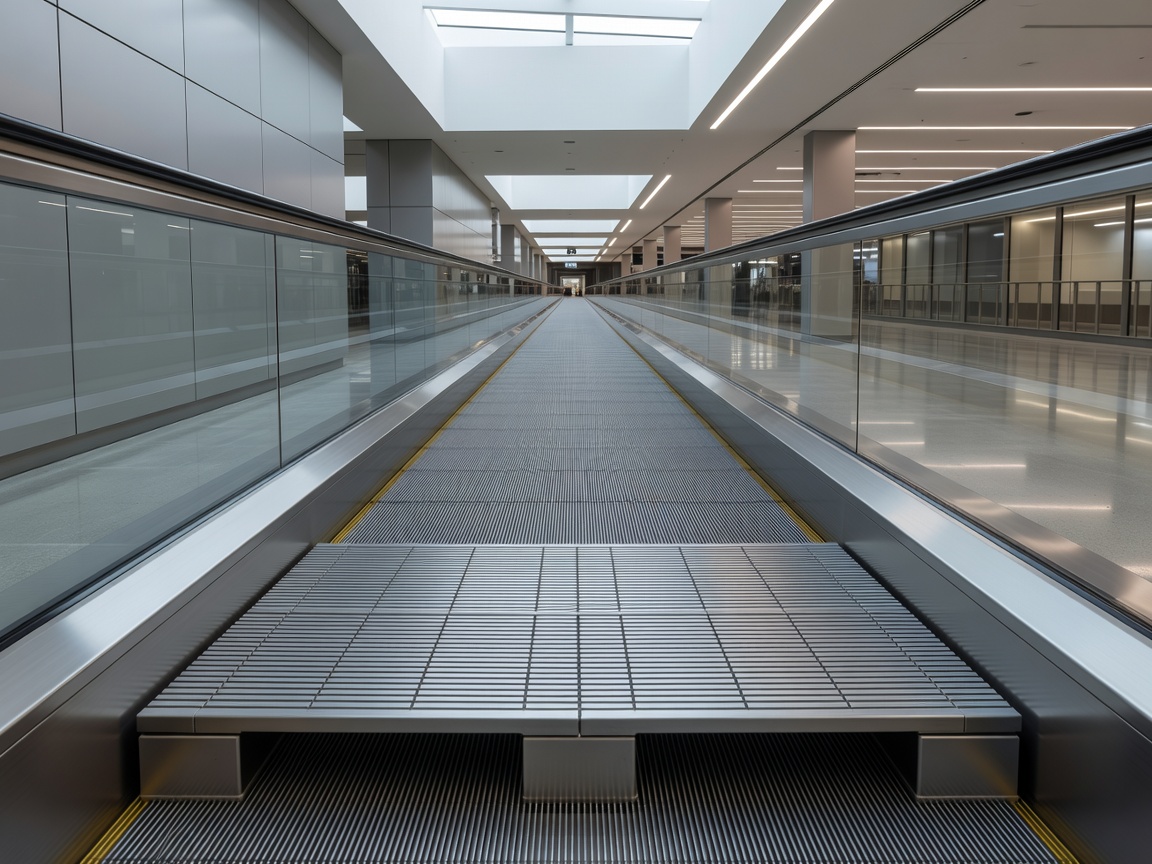
Pallet-type moving walkways are structurally similar to escalators, minus the vertical lift of individual steps. Instead of steps, they utilize flat, die-cast aluminum or steel pallets. These pallets are linked together on a continuous step chain that runs along a steel truss.
Design Profile: The metallic surface features longitudinal grooves (cleats) that mesh cleanly with comb plates at the upper and lower landings. This grooved design is vital for safety, ensuring that shoelaces, debris, and baggage wheels do not get drawn into the return mechanism.
Primary Applications: Pallet systems are the standard choice for major transport hubs, such as airport terminals and train stations, primarily because they can cover immense horizontal distances (frequently exceeding 100 meters). They offer superior durability under extreme foot traffic and support high structural loads.
Continuous Belt-Type Systems
Rather than utilizing discrete metallic segments, a belt-type walkway employs a continuous loop of thick, steel-reinforced rubber—similar in concept to an industrial conveyor belt, but engineered specifically for passenger transport and safety.
Design Profile: The rubber belt typically features a ribbed texture that provides excellent traction. Beneath the rubber, steel cords give the belt longitudinal stiffness, preventing stretching over time. The belt glides over a smooth slider bed or tightly spaced idler rollers. Because there are no discrete chain links carrying heavy metal pallets, these systems can often operate more quietly and with less aggressive vibration than their pallet counterparts.
Primary Applications: Belt systems are predominantly favored in retail environments (like multi-level supermarkets) because they handle inclines exceptionally well. While a horizontal auto-walk is generally a pallet system, inclined auto-walks (traveling between 10 to 12 degrees) usually employ continuous belts. The high friction of the rubber surface is ideal for holding specialized shopping carts in place as passengers transition between floors.
Comparative Analysis
When engineering a space that requires passenger conveyance, the decision between belt and pallet fundamentally relies on incline and distance.
- Maximum Distance: Pallet systems win effortlessly. The mechanical limit of a linked steel chain is much higher than that of a stretched rubber belt. High-capacity airports rely almost exclusively on horizontal pallet systems.
- Incline Capacity: Belt systems are far safer for inclined transport when wheeled carts are involved. The magnetic or mechanical braking systems of specialized shopping carts grip the ribbed rubber effectively, whereas metal pallets can be slippery on an incline.
- Maintenance Profile: Pallet systems require complex lubrication regimens for the step chain and track rollers. Belt systems require periodic re-tensioning and eventual wholesale belt replacement, which can be an intensive procedure requiring specialized vulcanization tools on-site.
Ultimately, both systems adhere to strict mechanical codes, but understanding the core structural differences ensures architectural designs meet the practical demands of the facility's users.