A moving walkway is a massive assembly of friction-prone moving parts. When maintenance is deferred, the consequence is not just operational downtime, but accelerated wear that necessitates highly expensive structural replacements. A rigorous preventative maintenance program is essential for maintaining safety and operational efficiency.
Routine Lubrication Schedules
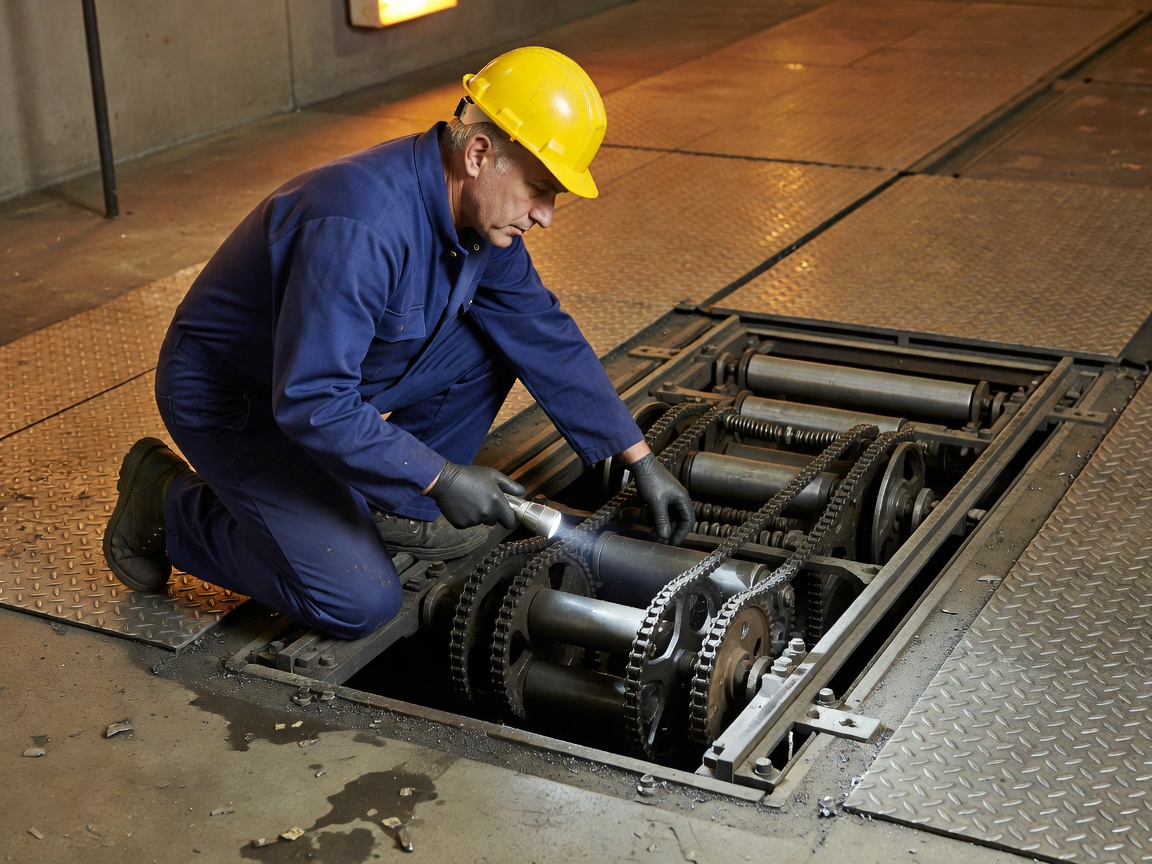
Friction is the primary enemy of pallet-based continuous tracks. The massive steel chains that pull the pallets undergo enormous tension. Modern moving walkways are often equipped with automatic lubrication systems. These systems utilize gravity drip or micro-pump dispensers to apply precise amounts of synthetic oil to the chain links as they pass.
However, automated systems require manual oversight. Technicians must regularly verify reservoir levels and check for blocked dispensation nozzles. Under-lubrication leads to grinding, squeaking, and rapid metal fatigue. Conversely, over-lubrication attracts dust and debris, forming an abrasive paste that grinds away the nylon rollers and steel tracks.
Comb Plate and Pallet Inspections
The visual inspection of the walking surface is a mandatory daily protocol. The comb teeth at the entry and exit points must mesh perfectly with the pallet grooves.
- Broken Comb Teeth: A single broken tooth on a comb plate can allow thin debris, like a shoelace or luggage strap, to pass beneath the floor. Broken comb segments must be replaced immediately, typically requiring a lock-out/tag-out shutdown of the system.
- Pallet Damage: Heavy impacts from dropped luggage can chip or deform the die-cast aluminum pallets. Deformed pallets will violently scrape against the comb plate during their return rotation. Identifying and swapping damaged pallets is a routine part of monthly maintenance.
Handrail Tension and Guide Roller Care
Handrails endure continuous pulling and bending. Over time, the internal steel cords within the rubber stretch. This results in poor grip on the drive wheels, causing the handrail to move slower than the track surface. Technicians must routinely check and adjust the tensioning springs located in the hidden return loop under the balustrade.
The small nylon guide rollers that keep the handrail on track wear down into flat spots if they seize. Regularly cleaning these guides and replacing seized rollers prevents the rubber handrail from heating up and breaking down prematurely.
Diagnostic Troubleshooting
When an auto-walk shuts down unexpectedly, modern microprocessors offer fault codes on the main control board located in the drive pit. Typical faults include:
- Safety Chain Break: An emergency stop button was pressed, or a comb plate switch was tripped by an obstruction.
- Motor Over-temp: Sustained running beyond weight capacity or failed cooling fans in the VFD.
- Step-Chain Slack: The continuous tension on the track chain has caused it to stretch beyond the tolerance of the tensioning carriage at the lower end. Links may need to be removed to shorten the chain.